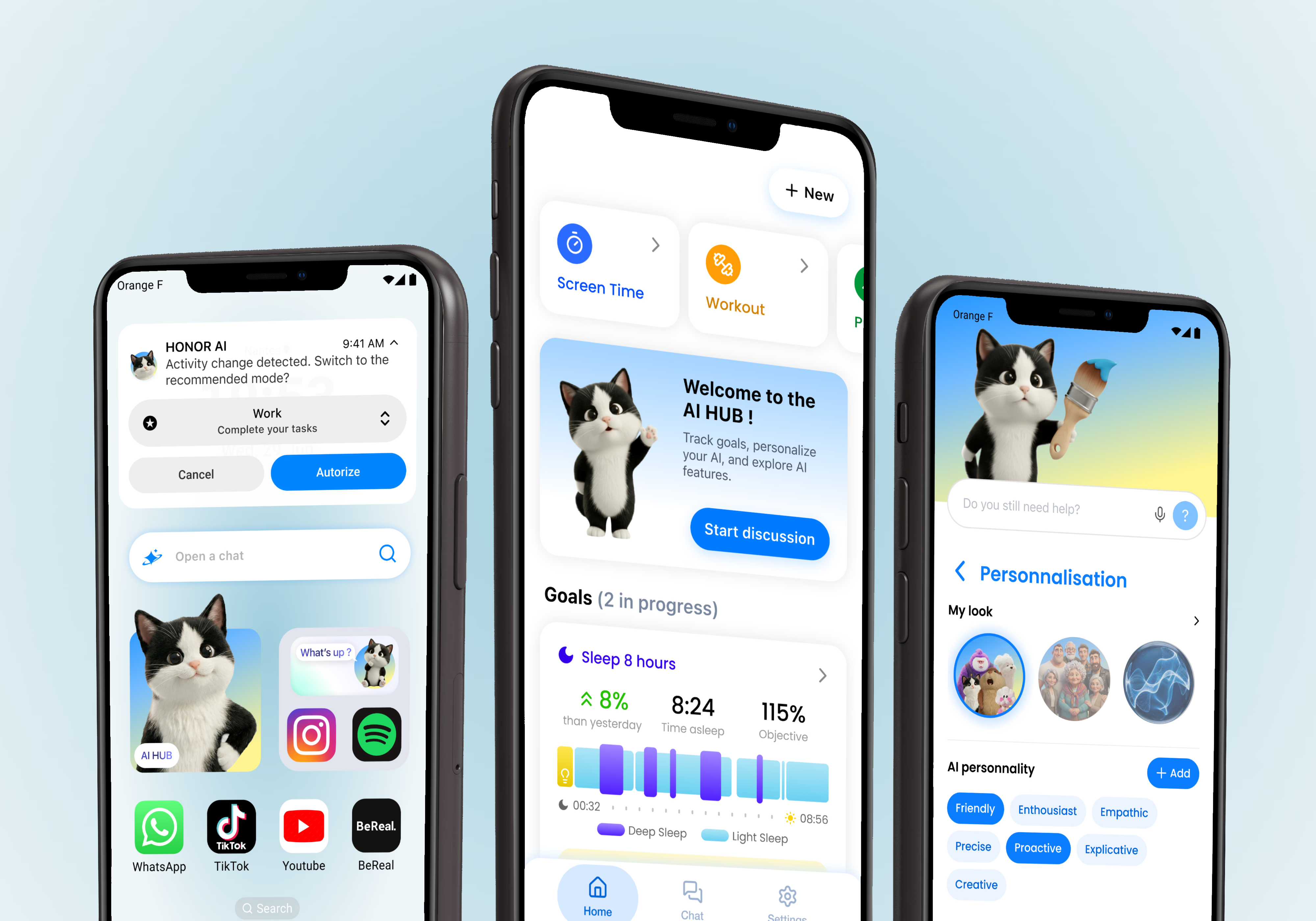
An AI companion for everyday life 日常生活中的 AI 伴侣
The vision, the challenge, and the goal 愿景、挑战与目标
Transforming the smartphone into an intelligent companion 将智能手机转变为智能伴侣
An AI that understands and adapts 能理解与适应的人工智能
The Honor AI project explores the transformation of the smartphone into an intelligent companion, capable of understanding the user's intentions, context, and needs, offering an adaptive, proactive, and deeply personalized mobile experience. Honor AI 项目探索了智能手机向智能伴侣的转型——能够理解用户的意图、情境与需求,提供自适应、主动且深度个性化的移动体验。
A question of trust and personalized well-being 信任与个性化幸福感的核心议题
From tool to companion 从工具到伴侣
How can we allow Honor smartphone users to genuinely feel that their AI accompanies and supports them in their daily lives, going beyond the simple use of a tool to create a relationship of trust and personalized well-being? 如何让 Honor 智能手机用户真正感受到 AI 在日常生活中陪伴与支持他们,超越单纯的工具使用,建立一种信任与个性化幸福感的关系?
A companion that learns who you are 深度了解你的智能伴侣
Toward an ultra-personalized experience 迈向超个性化体验
Transform the smartphone into a true adaptive companion that learns the user's identity, emotions, and needs at a deep level, delivering a unique and profoundly personalized mobile experience. 将智能手机转变为真正的自适应伴侣,在深层次上学习用户的身份认同、情感与需求,带来独一无二且深度个性化的移动体验。
Honor users & AI early adopters Honor 用户与 AI 早期使用者
Who we're designing for 我们的设计对象
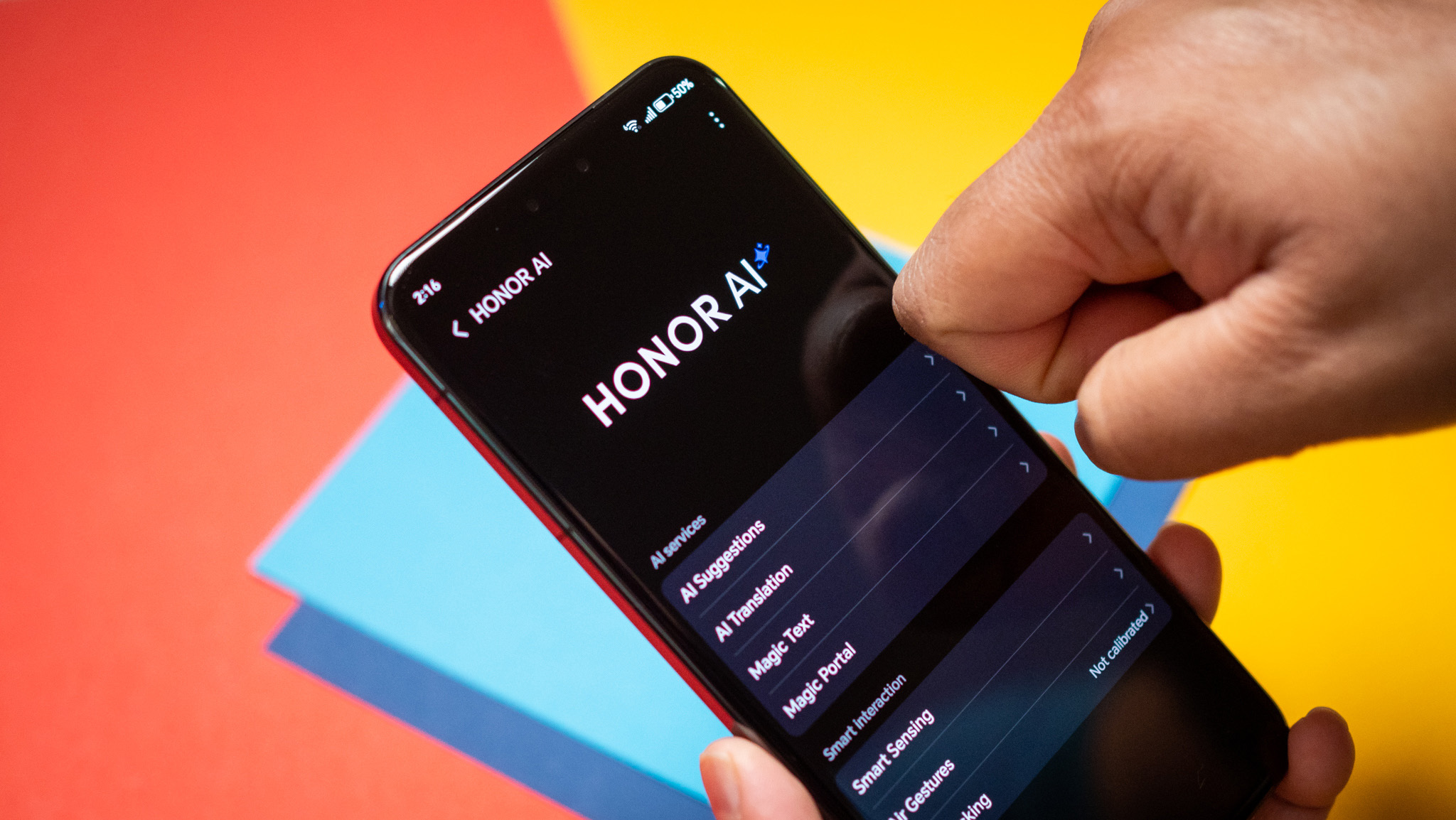
- A device that anticipates their needs without being intrusive 能预见需求而不显突兀的智能设备
- People who value efficiency, personalization, and authenticity in their digital tools 重视数字工具效率、个性化与真实性的用户群体
- Concrete help reaching personal goals (better sleep, less screen time, etc.) 切实协助实现个人目标(如改善睡眠、减少屏幕时间等)
Working methodology: Agile / SCRUM 工作方法论:敏捷 / SCRUM
Iterative design, continuous improvement 迭代设计,持续改进
01
Iterative Sprints 迭代冲刺
The project ran in 2-week sprints following an iterative rhythm. This allowed for progressive product evolution based on regular testing and adjustments. 项目以两周为一个冲刺周期运行,遵循迭代节奏。这使产品能够基于定期测试和调整实现渐进式演进。
02
Backlog & Prioritization 待办事项与优先排序
Prioritization was based on user value, product value, and complexity. In a time-constrained context, only high-ROI items were retained to focus efforts on the most relevant features. 优先级基于用户价值、产品价值和复杂度三个维度。在时间有限的背景下,仅保留高投入产出比的事项,将精力聚焦于最有价值的功能。
03
Team Improvement 团队持续改进
Retrospectives were held regularly to continuously improve team dynamics, using the Keep / Start / Drop method. 定期举行回顾会议,采用 Keep / Start / Drop 方法持续改善团队协作与工作方式。
Benchmark & competitive landscape 基准测试与竞品分析
Learning from existing AI companions 从现有 AI 伴侣产品中汲取洞见
Competitor 01 竞品 01
Replika AI
A customizable conversational AI that learns the user's writing style, vocabulary, and emotional reactions to create an immersive, evolving relationship. 一款可定制的对话式 AI,通过学习用户的写作风格、词汇和情感反应,构建沉浸式、持续进化的伴侣关系。
Competitor 02 竞品 02
Pi (Inflection AI)
An AI focused on emotional intelligence, offering supportive conversations with a natural voice and a constant goal of reassuring and accompanying the user. 专注于情感智能的 AI,以自然的语音提供支持性对话,始终致力于给予用户安慰与陪伴。
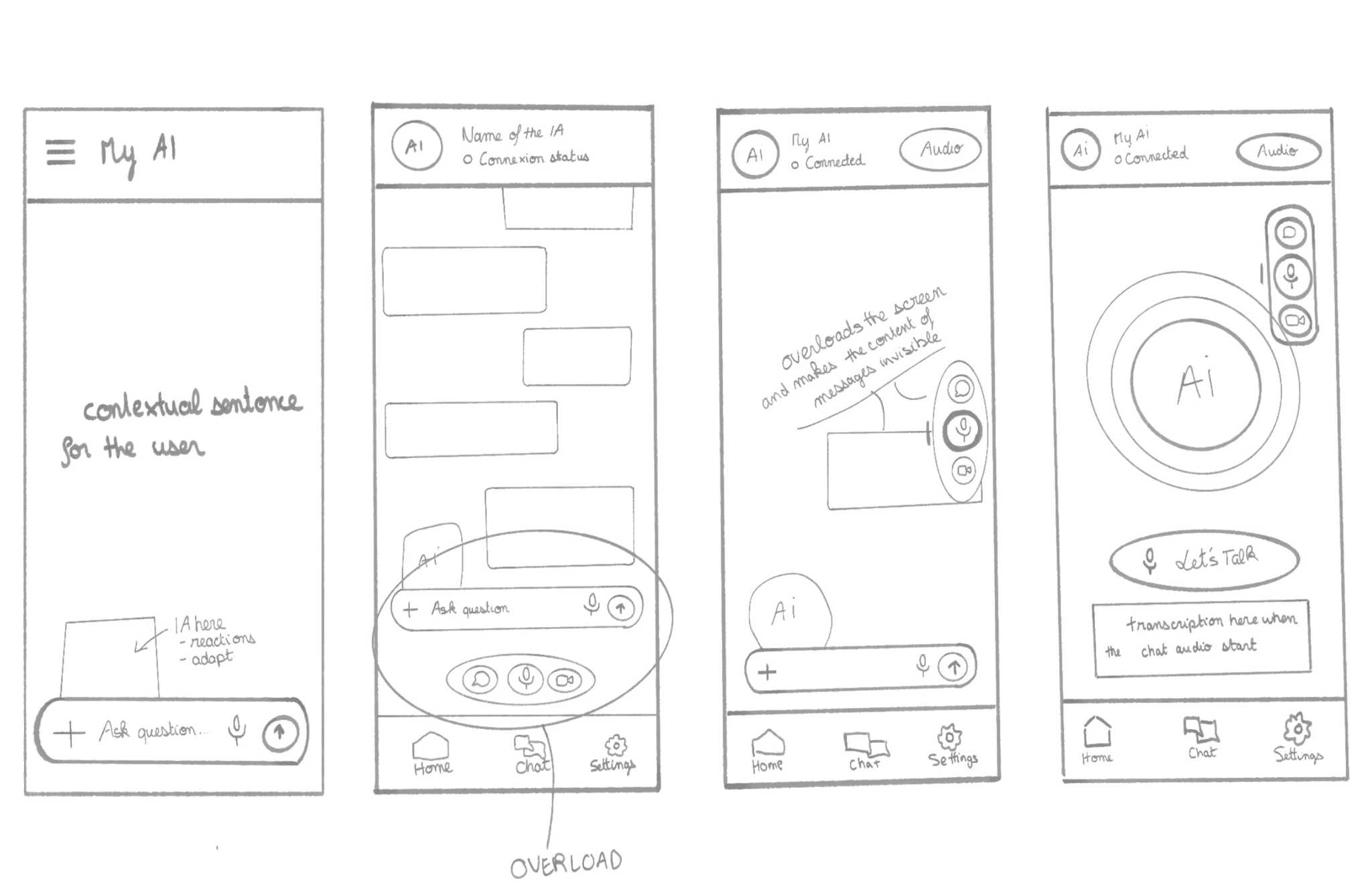
Structuring the experience before the interface 在界面之前构建体验结构
These wireframes define key user journeys, prioritize information hierarchy, and lay the foundation for clear interaction between the user and the AI. 这些线框图定义了关键用户旅程,确立信息层级优先级,为用户与 AI 之间清晰的交互奠定基础。
Visual Identity 视觉设计
Visual universe 视觉宇宙
AI Representation AI 形象呈现
A visual reference point for interaction 交互的视觉参考中心
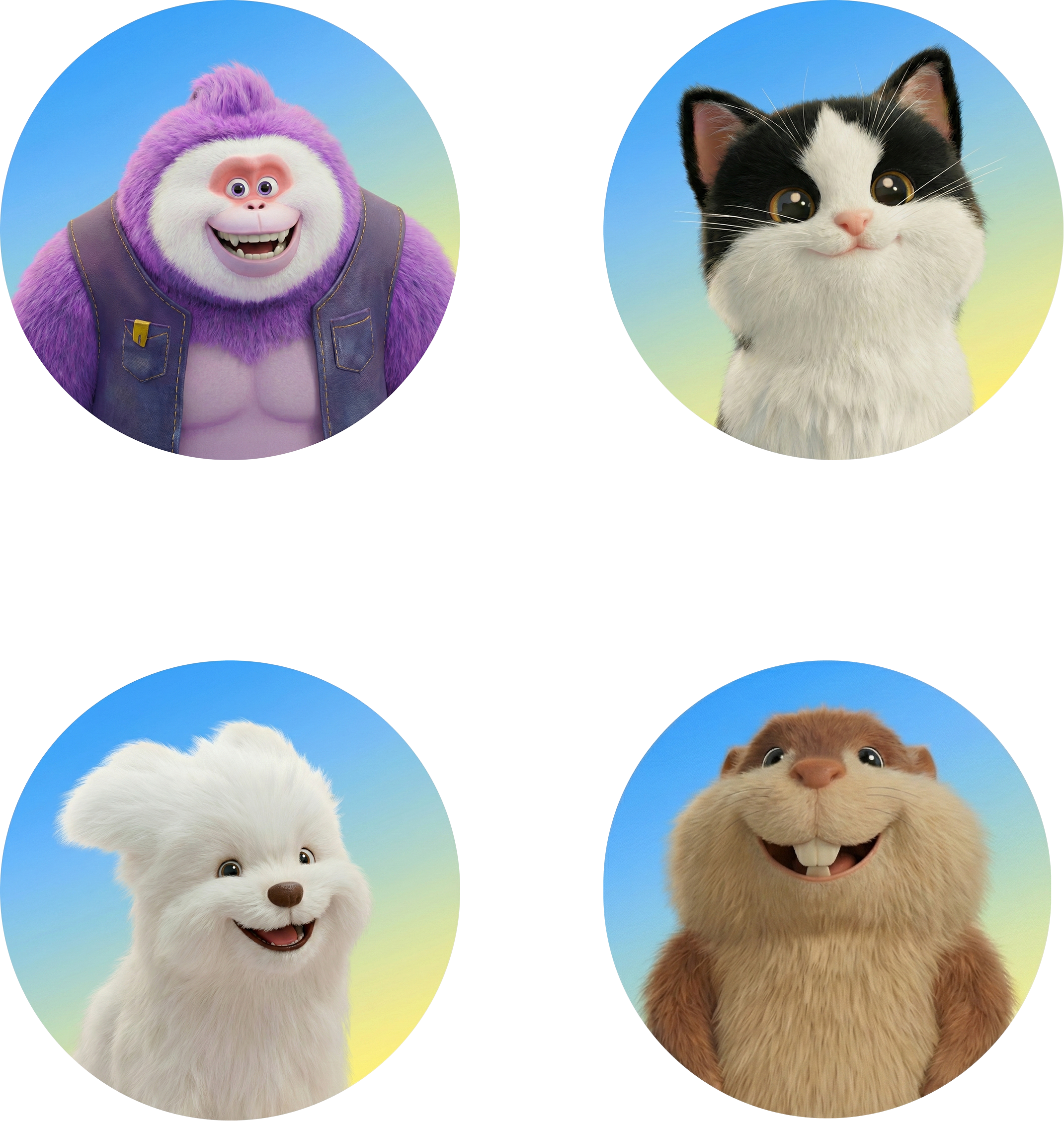
We chose to place the AI's visual representation at the center of the interfaces, as it becomes the primary reference point for the user and facilitates interaction with the system. 我们选择将 AI 的视觉形象置于界面中心,因为它成为用户的主要参考点,并促进与系统的自然交互。

Visual Variations 视觉多样性
Emotion-driven design 情感驱动的设计
The AI was designed with multiple visual expressions depending on context and situation: it can change appearance, and most importantly, its emotional state changes to be the closest and most supportive companion possible. AI 被设计成根据情境和场景呈现多种视觉表达:它可以改变外观,更重要的是,其情感状态也会随之变化,以成为最贴近用户、最具支持性的伴侣。
Results 成果
Four features that define the experience 定义体验的四大核心功能
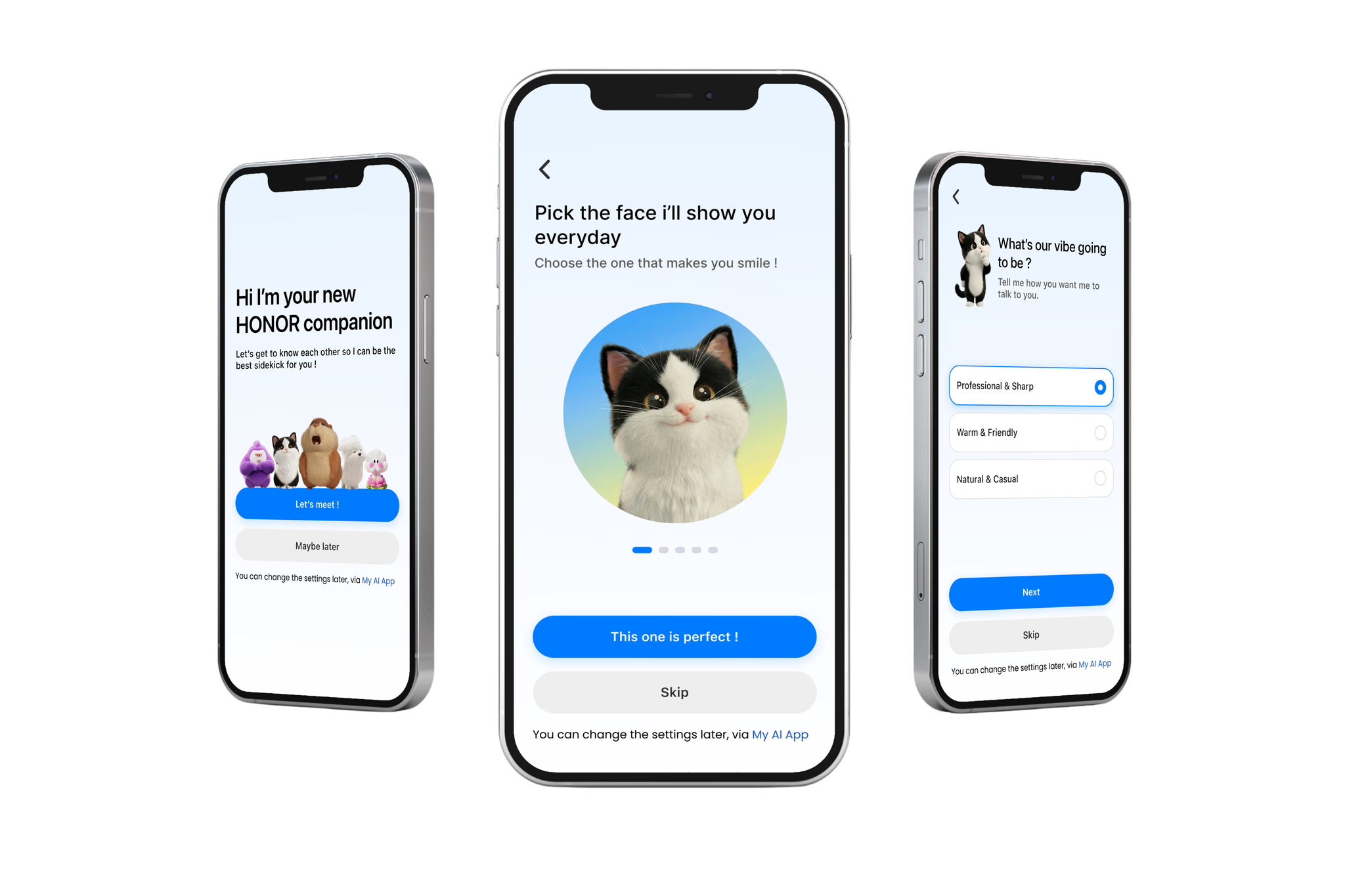
Feature 01 功能 01
Onboarding: A companion from the start 引导体验:从一开始就是伴侣
Building trust from the very first interaction 从首次交互建立信任
The onboarding introduces the AI as a companion rather than a tool, establishing trust and personalization from the very first interaction. The user defines their preferred level of proactivity, control, and customizes the AI's appearance. From the first interactions, the system adjusts to the user and builds the foundation for an evolving, tailored experience. 引导流程将 AI 定义为伴侣而非工具,从首次交互起便建立信任与个性化关系。用户可设定自己偏好的主动程度与控制级别,并自定义 AI 的外观。从最初的交互开始,系统便开始调整以适应用户,奠定持续进化、量身定制体验的基础。
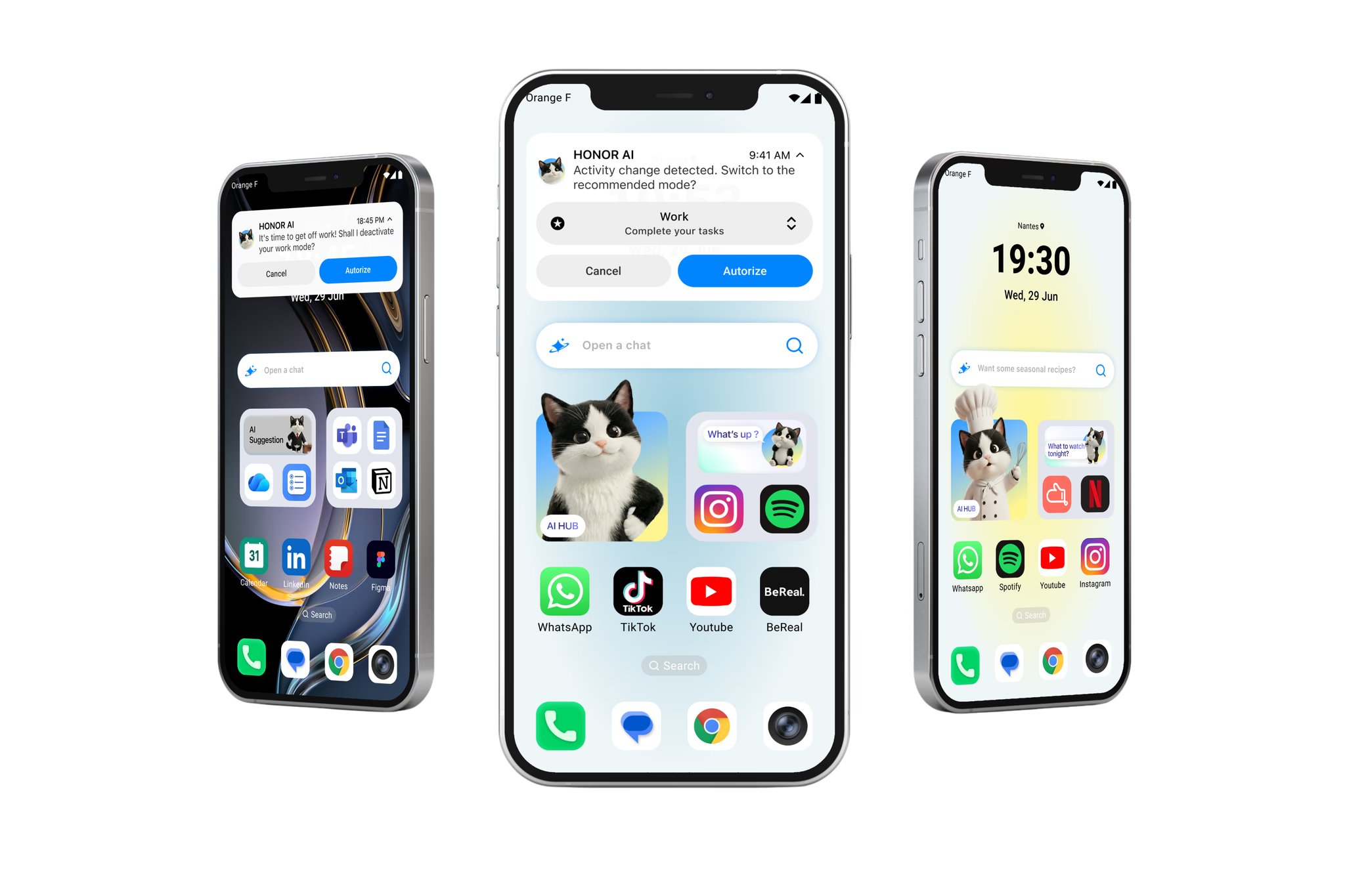
Feature 02 功能 02
Contextual Interface: Automatic adaptation 情境界面:自动适应
The right tool, at the right moment 在正确时刻提供正确工具
Upon arriving at the office, the AI automatically activates a work context: the wallpaper becomes neutral and professional, the home screen reorganizes to highlight productivity tools and push social apps into the background. When leaving the office, the interface returns to personal mode. The AI acts as a proactive interface manager, always offering the right tool at the right moment, while letting the user disable any automation at any time. 到达办公室时,AI 自动激活工作情境:壁纸变为专业简洁风格,主屏幕重新排列以突出生产力工具并将社交应用退至后台。离开办公室后,界面恢复个人模式。AI 作为主动的界面管理者,始终在正确时刻提供正确工具,同时允许用户随时关闭任何自动化功能。
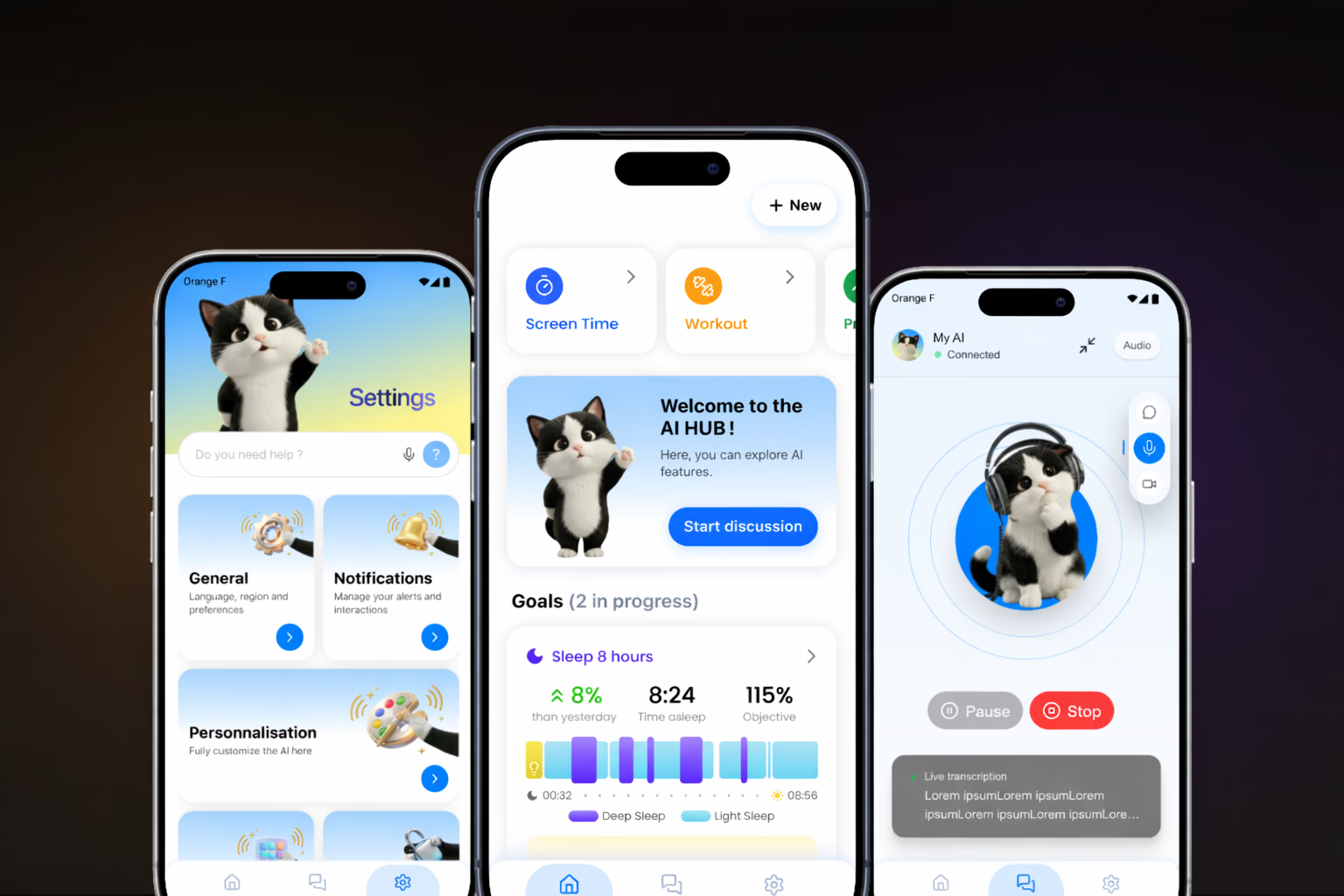
Feature 03 功能 03
AI Hub: A dedicated control center AI Hub:专属控制中心
Transparency, trust, and full control 透明、信任与完全掌控
We designed the AI Hub: a central space bringing together everything related to the companion. Accessible via a widget, it lets the user find their goals (editable at any time), their data (sleep, screen time), their history, and the AI's settings. The user can also interact with their AI directly via an integrated chat. The Hub helps actively reach personal goals while remaining fully configurable: the user can adjust behavior, permissions, and personalize the AI. 我们设计了 AI Hub:一个汇聚所有伴侣相关内容的中央空间。通过小组件即可访问,用户可以查看目标(随时可编辑)、数据(睡眠、屏幕时间)、历史记录及 AI 设置,并通过内置聊天直接与 AI 互动。Hub 帮助用户积极实现个人目标,同时保持完全可配置性:用户可调整行为、权限并个性化 AI。
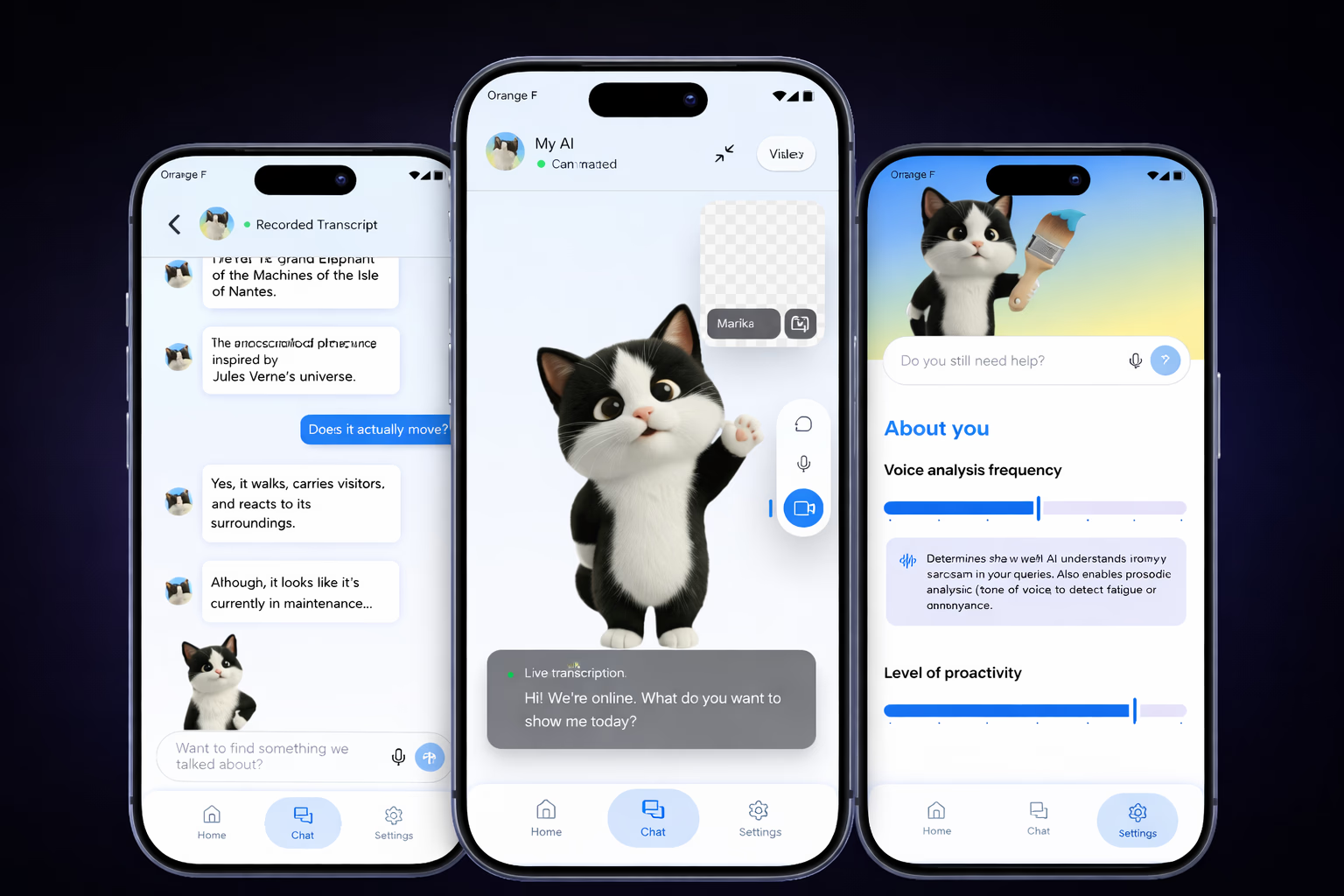
Feature 04 功能 04
Trust & Communication 信任与沟通
An AI that grows with you 与你共同成长的 AI
With smart transcription, the AI automatically converts calls into text, making it easy to retrieve key information and never lose track of past exchanges. The Hub operates on a transparency principle: the user sees what the AI is learning, accesses their data, and simply chooses what to share. The relationship builds over time: the user can adjust the AI's personality at any time, while the AI continuously learns and adapts its way of speaking and interacting to develop a unique expression tailored to each user. 借助智能转写功能,AI 自动将通话转换为文字,便于检索关键信息,永不遗漏过往交流。Hub 遵循透明原则:用户可以看到 AI 正在学习的内容,访问自己的数据,并简单选择愿意分享的信息。关系随时间积累:用户可随时调整 AI 的个性,而 AI 则持续学习和适应其说话与交互方式,发展出专属于每位用户的独特表达。
Key Learnings 关键收获
- Working on an AI companion made me realize how much trust depends on transparency. Users need to understand what the AI is doing and why — without that, even useful features feel intrusive. 在Honor AI项目中,我意识到信任建立于透明度之上。用户需要理解AI在做什么以及为什么——否则即使有用的功能也会让人感到不适。
- Designing adaptive interfaces pushed me to think in systems rather than screens. Each state and context required its own logic, which made the design process far more complex and rewarding. 设计自适应界面让我学会从系统角度而非单一页面角度思考,每个状态和情境都需要独立的逻辑。
- Collaborating on a speculative brief taught me to anchor creative decisions in research. Without real users to test with, personas and competitor analysis became essential guardrails. 在没有真实用户测试的情况下,角色模型和竞品分析成为了关键的设计依据。